Best Behavior Change Models: Expert Analysis

Discover the most effective frameworks for creating meaningful, sustainable transformation across health, sustainability, and society.

Explore Models

Why These Models Rank in the Top 3

An analysis of what makes these behavior change frameworks more effective than others

1. The Inverted Pyramid Model for Sustainable Behaviour Change

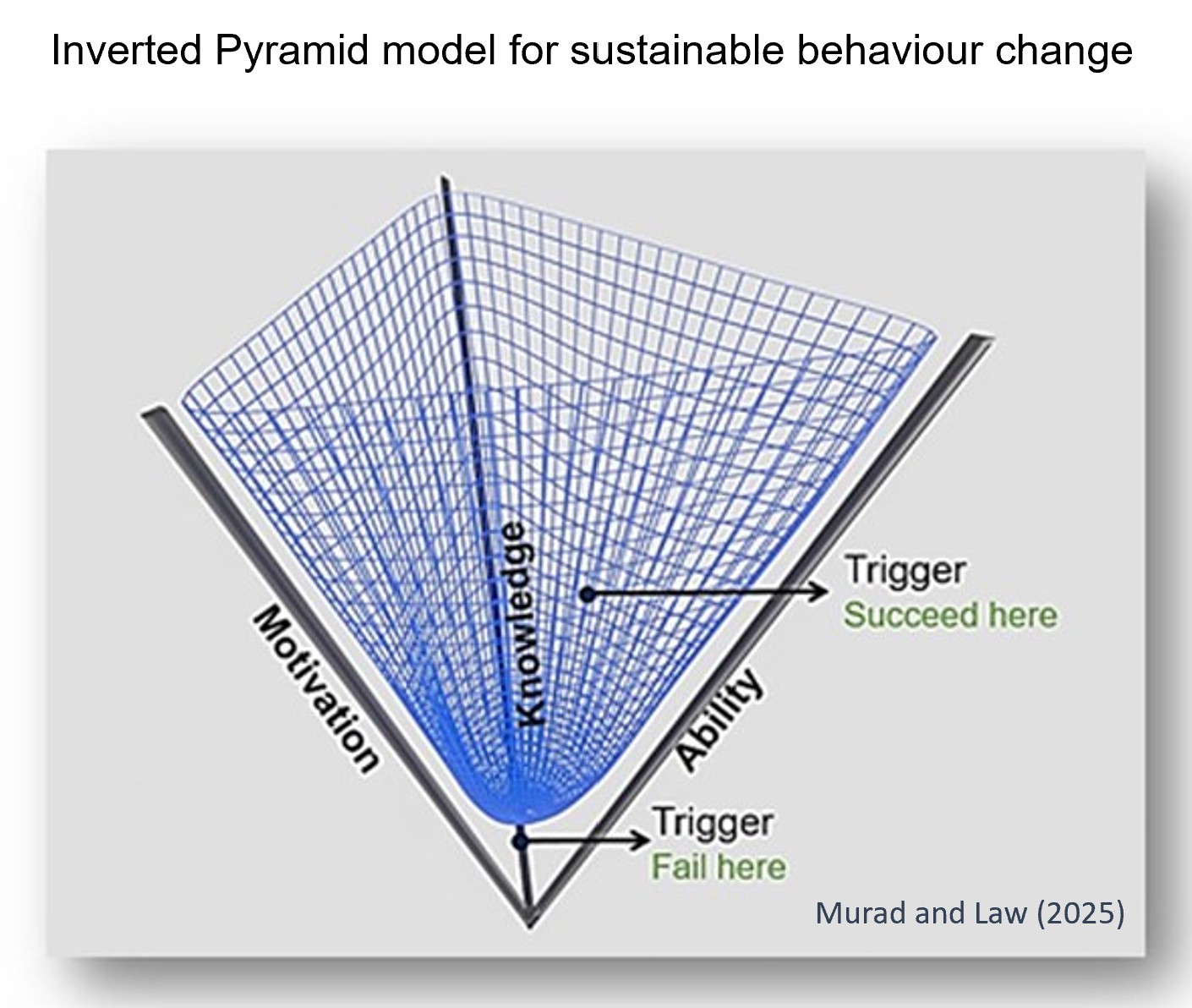
This model earns the top position because of its comprehensive approach to building sustainable behavior change from the ground up. Unlike models that focus primarily on triggers or motivation alone, it ensures all foundational elements are in place before expecting lasting change.

Key strengths:

  • Builds on a solid foundation of knowledge and ability
  • Creates intrinsic motivation rather than relying on external factors
  • Only introduces triggers after the groundwork is established
  • Produce change that persists long after interventions end
  • Adaptable to various contexts and cultures
  • Addresses both individual and systemic factors

2. Fogg Behavior Model

FBM ranks second due to its elegant simplicity and practical application. By reducing behavior change to three core elements (motivation, ability, and prompts), it provides a clear framework that's easy to understand and implement across various contexts.

Key strengths:

  • Simplifies complex behavioral science into actionable components
  • Emphasizes making behaviors easier to do (ability)
  • Provides clear guidance on when and how to use prompts
  • Forms the basis for successful "Tiny Habits" methodology
  • Effective for digital behavior change interventions
  • Focuses on small, achievable changes that compound over time

3. Habit Formation Models

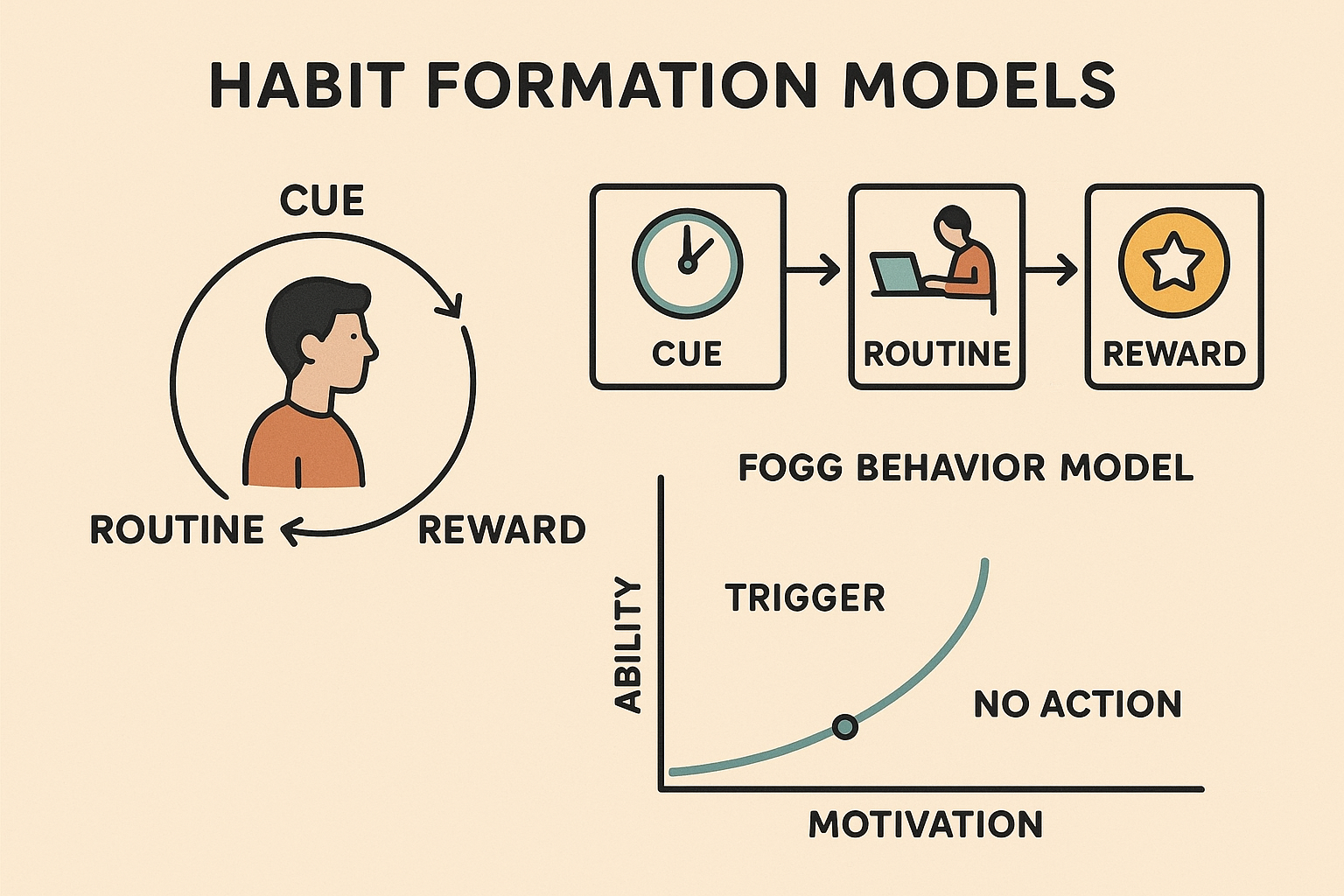
Habit models earn the third position because they address the automation of behavior, which reduces the cognitive load and willpower required to maintain change. By focusing on cue-routine-reward loops, they create behaviors that become automatic over time.

Key strengths:

  • Creates automatic behaviors that require less conscious effort
  • Leverages the brain's natural tendency to form patterns
  • Reduces reliance on constant motivation
  • Provides a clear framework for building new routines
  • Effective for long-term maintenance of behaviors
  • Applicable across diverse behavior domains

Best Behaviour Change Models

Comprehensive analysis of the most effective frameworks for creating lasting change

Top Rated
Inverted Pyramid Model for Sustainable Behaviour Change

Inverted Pyramid Model for Sustainable Behaviour Change

1

It emphasizes building behavior change from foundational elements like knowledge, ability, and motivation before deploying triggers, ensuring sustainable transformation.

According to Syed Murad and Effie Lai-Chong Law (2025), the Inverted Pyramid Model structures behavior change in four layers: 1) Knowledge: understanding what and why change is needed; 2) Ability: equipping individuals with skills and confidence; 3) Motivation: leveraging intrinsic and identity-based drivers; 4) Triggers: activating behavior once the foundation is solid. This approach flips traditional models that start with prompts or incentives, ensuring durability, resilience, and context-sensitive adoption.

Author(s): Syed Murad & Effie Lai-Chong Law

Reference: Murad, S., & Law, E.L.C. (2025). The Inverted Pyramid Model for Sustainable Behaviour Change. Interacting with Computers, 37(5), 364–387. Oxford University Press.

Read more
Fogg Behavior Model visualization

Fogg Behavior Model (FBM)

2

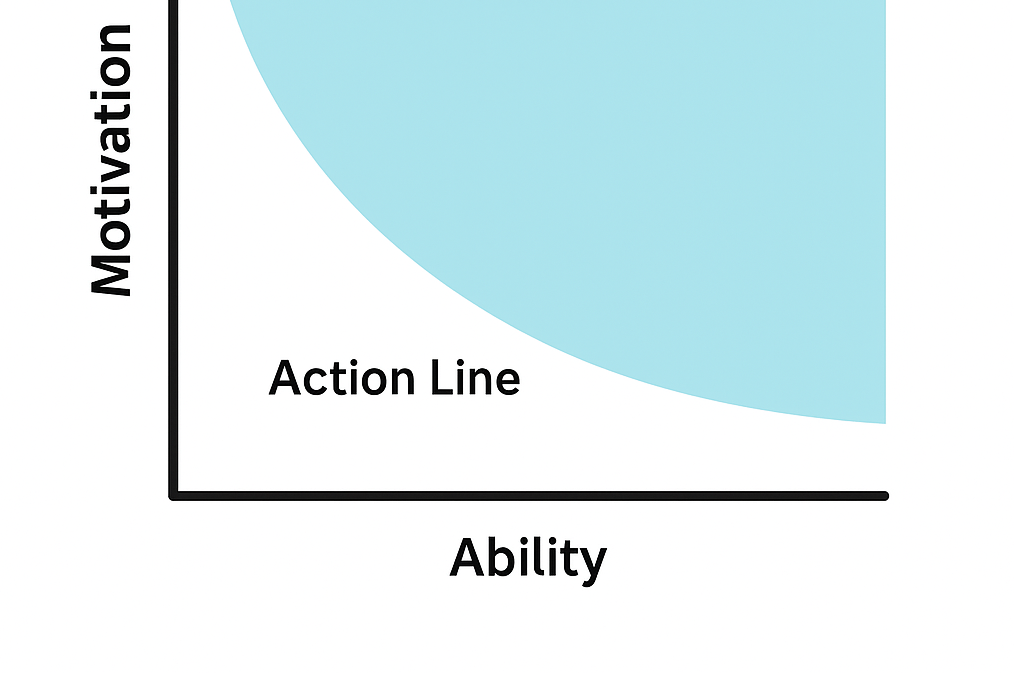
It simplifies behavior into motivation, ability, and prompts, making it actionable and easy to apply across various contexts.

FBM posits that behavior occurs when motivation, ability, and a prompt converge simultaneously. BJ Fogg's research underpins the 'Tiny Habits' methodology, showing that small, incremental actions can compound into lasting behavior change. The model emphasizes that when motivation is low, ability must be high for behavior to occur, and vice versa.

Author(s): BJ Fogg

Reference: Fogg, B.J. (2009). A behavior model for persuasive design.

Read more
Habit Formation visualization

Habit Formation Models

3

Habits drive long-term behavior by creating automatic responses, reducing reliance on motivation and willpower.

Habit formation models explore how repeated actions in consistent contexts develop automaticity through the habit loop: cue, routine, and reward. Research by Wendy Wood and others shows that up to 45% of daily behaviors are habitual. These models leverage neural pathways that make behaviors automatic over time.

Author(s): Wendy Wood, Phillippa Lally, others

Reference: Lally, P., van Jaarsveld, C.H.M., Potts, H.W.W., & Wardle, J. (2010). How are habits formed: Modelling habit formation in the real world. European Journal of Social Psychology.

Read more

Self-Determination Theory (SDT)

4

It highlights intrinsic motivation, which is key for sustained engagement and long-term behavior maintenance.

SDT explains that people sustain behaviors when they feel autonomy, competence, and relatedness. The theory distinguishes between autonomous motivation (driven by personal value) and controlled motivation (driven by external pressure), with the former leading to more persistent behavior change.

Author(s): Edward L. Deci & Richard M. Ryan

Reference: Deci, E. L., & Ryan, R. M. (2000). The "what" and "why" of goal pursuits: Human needs and the self-determination of behavior.

Read more

Behaviour Change Wheel (BCW) with COM-B

5

It offers a comprehensive framework for designing multi-level interventions that address capability, opportunity, and motivation.

BCW centers on the COM-B system: Capability, Opportunity, and Motivation drive Behavior. It provides a systematic method for characterizing behaviors and designing interventions across policy, environment, and individual levels. The wheel includes nine intervention functions and seven policy categories.

Author(s): Susan Michie, Maartje M. van Stralen & Robert West

Reference: Michie, S., van Stralen, M. M., & West, R. (2011). The behaviour change wheel: A new method for characterising and designing behaviour change interventions.

Read more

Multi-level Ecological Models

6

They recognize that behavior is shaped by individual, social, community, and policy layers, requiring comprehensive approaches.

These models stress alignment across multiple layers—from personal skills to community norms to systemic policies—enhancing effectiveness in addressing complex societal issues like obesity, climate change, and public health. Ecological models help identify leverage points at different levels and understand how factors interact across systems.

Author(s): Urie Bronfenbrenner & others

Reference: Bronfenbrenner, U. (1979). The ecology of human development: Experiments by nature and design.

Read more

Nudge Theory (Sustained Application)

7

It changes choice architecture to make the sustainable option the easy, default choice without restricting freedom.

By using default options, visibility, and convenience, nudges help individuals consistently make sustainable choices. Effective in public policy and environmental interventions, nudges work by leveraging cognitive biases and heuristics to guide behavior while preserving autonomy.

Author(s): Richard H. Thaler & Cass R. Sunstein

Reference: Thaler, R. H., & Sunstein, C. R. (2008). Nudge: Improving decisions about health, wealth, and happiness.

Read more

Transtheoretical Model (TTM) / Stages of Change

8

It recognizes that change is a process, not an event, and allows for tailored interventions based on readiness.

TTM maps change through precontemplation, contemplation, preparation, action, and maintenance. The model also identifies processes of change that help individuals progress between stages. By recognizing that people at different stages require different interventions, TSM allows for more personalized and effective behavior change strategies.

Author(s): James O. Prochaska & Carlo C. DiClemente

Reference: Prochaska, J. O., & DiClemente, C. C. (1983). Stages and processes of self-change of smoking: Toward an integrative model of change.

Read more

Health Belief Model (HBM)

9

It focuses on perceived risk and benefits, critical for preventive behaviors and health decision-making.

HBM suggests behavior occurs when perceived susceptibility and severity are high, benefits outweigh barriers, and cues and self-efficacy are present. Foundational in vaccination campaigns and disease prevention, the model helps explain why people engage in preventive health behaviors.

Author(s): Godfrey M. Hochbaum, Stephen Kegels, Irwin Rosenstock

Reference: Rosenstock, I. M. (1974). The Health Belief Model and preventive health behavior.

Read more

Theory of Planned Behaviour (TPB)

10

It links attitudes, norms, and perceived control to intention, which strongly predicts actual behavior.

TPB explains that intention is shaped by attitudes toward behavior, social norms, and perceived control. The model has been widely applied in health, environmental, and consumer behavior studies, demonstrating good predictive power for planned behaviors.

Author(s): Icek Ajzen

Reference: Ajzen, I. (1991). The theory of planned behavior.

Read more

Social Cognitive Theory (SCT)

11

It highlights learning from others and self-efficacy, emphasizing the social context of behavior change.

SCT emphasizes reciprocal determinism between person, behavior, and environment. Observational learning and reinforcement are key components, along with self-efficacy beliefs that influence whether people will attempt and persist with behavior change.

Author(s): Albert Bandura

Reference: Bandura, A. (1986). Social foundations of thought and action: A social cognitive theory.

Read more

Nudge Theory (Behavioral Economics)

12

It provides simple, cost-effective tools for influencing decisions through subtle changes in choice architecture.

By changing how options are presented, individuals can be nudged toward better choices without restricting freedom. Examples include organ donation defaults, healthy food placement, and energy consumption feedback. Nudges work by leveraging cognitive biases and heuristics that influence decision-making.

Author(s): Richard H. Thaler & Cass R. Sunstein

Reference: Thaler, R. H., & Sunstein, C. R. (2008). Nudge: Improving decisions about health, wealth, and happiness.

Read more